 Call to book
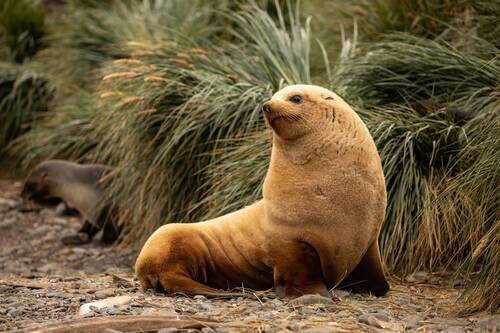
The Antarctic fur seal is a pinniped native to the cold waters of the Southern Ocean, particularly around Antarctica and subantarctic islands. Characterized by its dense, insulating fur, long whiskers, and streamlined body, it is well adapted for life in frigid marine environments. They are highly agile swimmers, feeding primarily on krill, fish, and squid, and spending most of their lives at sea except during the breeding season. Once heavily exploited during the 18th and 19th centuries for their fur, the species has since made a strong recovery and now exists in large numbers.

Credit: Adrian Wlodarczyk

Credit: Fiona Wardle
Quick Leopard Seal Facts
| Scientific name | Arctocephalus Australis |
| Length | Males: up to 2m (6.6ft) Females: up to 1.5m (4.9ft) |
| Weight | Males: 150 - 200kg Females: 30 - 60kg |
| Population | 250,000 individuals |
| Species Conservation Status | Least Concern |
Diet and Behaviour
Antarctic fur seals are highly active marine predators that spend most of their lives at sea, where they forage extensively in cold, nutrient-rich waters. Their diet is dominated by Antarctic krill, but they also consume a variety of fish and squid, adjusting their prey choices based on seasonal availability and local ocean conditions. They are agile, efficient swimmers capable of long-distance travel and deep dives, using their sensitive whiskers to detect prey movements underwater.
These seals are generally social, often resting in groups when hauled out on land, yet they remain strongly oriented toward a pelagic lifestyle. They are alert, curious animals with keen sensory awareness, and their daily activity patterns are closely tied to ocean productivity, sea ice conditions, and prey distribution rather than fixed routines.
Breeding Cycle
The breeding cycle of the Antarctic fur seal is highly seasonal and synchronized with the austral summer. Adult males arrive first at breeding beaches, typically in late October to November, where they establish and defend territories. Females arrive shortly afterward and give birth to a single pup conceived during the previous breeding season, usually within a few days of coming ashore. After giving birth, females mate again within about a week, but the fertilized embryo undergoes delayed implantation, remaining dormant for several months so that the next birth will align with favorable environmental conditions. Females then alternate between nursing their pup on land and making foraging trips at sea for several months, while pups remain ashore developing strength and coordination until they are weaned several months later.

FAQs on Antarctic Fur Seals
Are Antarctica fur seals aggressive?
Antarctic fur seals can be aggressive, particularly when they feel threatened or during the breeding season. Adult males are highly territorial and may charge or bite to defend their space, while females with pups can also react defensively. Although they sometimes appear calm or accustomed to people, they can move quickly on land and may become unpredictable if approached too closely. Keeping a safe distance and avoiding sudden movements helps reduce the chance of provoking aggressive behaviour.
What are their average lifespan?
Males tend to live about 15 years while females live to about 25 years.
Females often live longer than males, as males experience higher mortality due to intense competition, fighting, and the physical demands of maintaining territories during the breeding season.
Are the Antarctic fur seals endangered?
No, according to the IUCN Red List they are generally considered Least Concern, having remade a remarkable comeback for near extinction, which was caused from overhunting.
Where are you most likely to see an Antarctic Fur Seal?
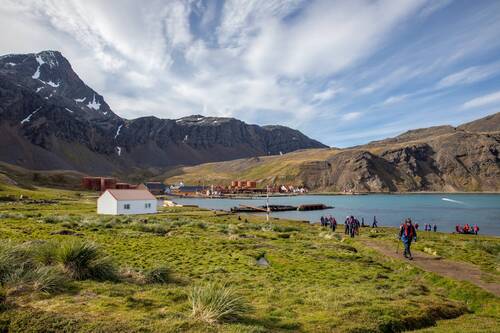
These seals primarily inhabit subantarctic islands, especially South Georgia.
Although they’re called “Antarctic” fur seals, they rarely occur on the Antarctic mainland and instead breed on islands south of the Antarctic Convergence (where cold Antarctic waters meet warmer northern waters)
Featured Antarctic Voyages