Call to book

Macaroni Penguin

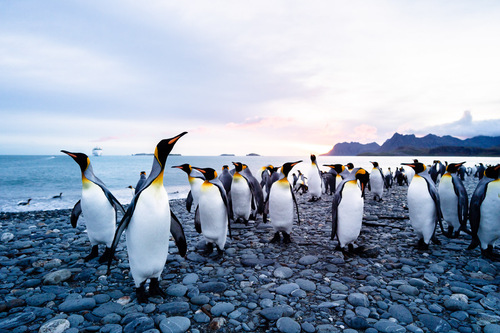
The macaroni penguin is famously known for its distinctive bright yellow-orange crest feathers that sweep back over its head. It has a black upper body and white belly, with a strong, orange-brown beak and pinkish feet, giving it a striking, high-contrast appearance. Macaroni penguins are among the most numerous penguin species, but their populations have declined in some areas due to environmental changes and human impacts. As a result, they are currently classified as Vulnerable on the IUCN Red List, highlighting ongoing conservation concerns despite their large overall numbers.

Quick Adelie Penguin Facts

Scientific name Eudyptes Chrysolophus
Length
70 - 7cm (28- 30in)
Weight
3 – 6kg (6.6 - 13lbs)
Population
11- 12 million individuals 
Species Conservation Status
Vulnerable

Diet and Behaviour

Feeding on krill, small fish, and squid, foraging in the ocean where they are strong swimmers and capable of diving to moderate depths to catch prey. They often travel in large groups while feeding, which helps them locate food more efficiently and provides protection from predators. On land, macaroni penguins are highly social and vocal, using calls and body displays to communicate within their crowded colonies. Their movements and activity patterns are closely linked to the seasonal availability of sea ice and ocean productivity, which can influence how far they must travel to find food.


Breeding Cycle 

They have a seasonal breeding cycle that begins when they return to rocky sub-Antarctic and Antarctic islands during the warmer months. They typically form large, dense colonies where pairs establish nesting sites among stones and vegetation, often close to one another. Females usually lay two eggs, but the first egg is smaller and less likely to survive, while the second egg receives the majority of parental care. Both parents share the duties of incubating the egg and later feeding and protecting the chick until it is ready to leave the nest and enter the sea.