 Call to book
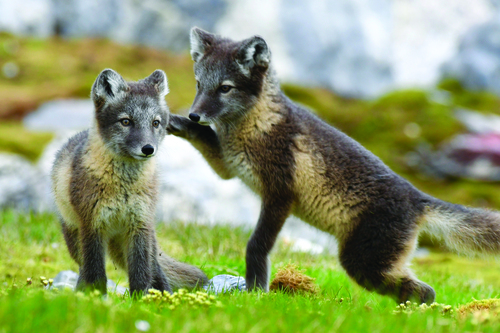
The Arctic fox is a small, hardy predator perfectly adapted to life in the polar regions. Found across the Arctic tundra of North America, Europe, and Asia, it is best known for its thick insulating fur, which changes colour with the seasons - white in winter for camouflage in snow, and brown or grey in summer. Arctic foxes have compact bodies, short ears, and furry paws that help conserve heat and move easily across ice and snow. They are highly opportunistic feeders, eating lemmings, birds, eggs, fish, carrion, and leftovers from larger predators such as polar bears. Able to survive some of the coldest temperatures on Earth, the Arctic fox is a resilient and resourceful species.

Quick Arctic Fox Facts
| Scientific name | Vulpes Lagopus |
| Length | 46-68cm (18-27in) |
| Weight | 3-9kg (6.6-19.8 lbs) |
| Species Conservation Status | Least Concern |
Diet and Behaviour
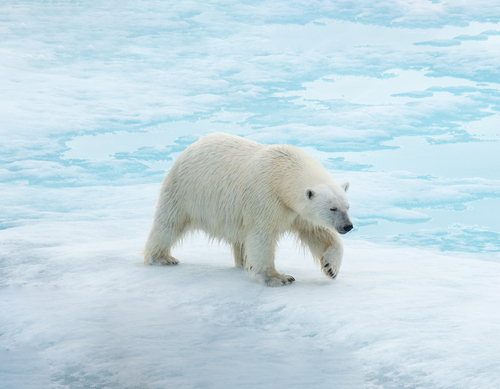
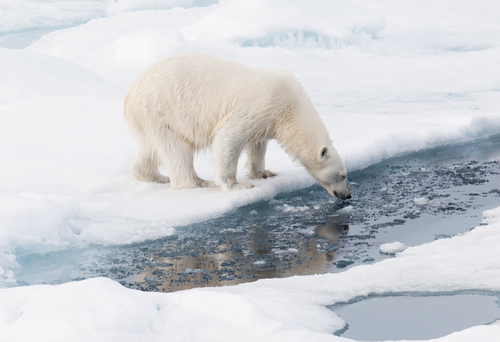
Arctic foxes have an opportunistic diet that varies with season and location. They primarily feed on small mammals such as lemmings and voles, which strongly influence their population cycles, but they also eat squirrels, birds, bird eggs, berries, fish, and carrion. In areas without small mammals, like Svalbard, they rely heavily on birds and scavenge near bird colonies. During winter, they depend more on carrion and often follow polar bears to feed on leftover seal carcasses, though this is risky as polar bears may prey on them. Storing extra food by burying it int he frozen ground, so they can later retrieve it when food is scarce in winter.
Arctic foxes are highly adaptable and remain active throughout winter, tolerating extreme cold without shivering. They dig temporary burrows for shelter in severe conditions and exhibit flexible social systems, often living in family groups during summer.
Breeding Cycle
Arctic foxes breed in March and April, with pups born in dens every spring after a gestation period of 51–54 days. Litters typically range from 6 to 12 pups, but the number varies by region and food availability. Both parents care for the young, with the male providing food and guarding the den while the female nurses. Families remain together through summer, and the species exhibits a flexible social system: monogamy is common in some areas, but nonbreeding helpers and subdominant females may assist at dens. Pups become independent at 8–10 weeks, and dens (often reused for generations) can last for centuries in suitable permafrost areas.

Arctic Fox FAQs
How long do arctic fox's live for?
They typically live from 3-6 years in the wild, however, in favourable conditions they can survive up to 10 years.
Where do arctic foxes live?
Arctic foxes live in high Arctic regions across the Northern Hemisphere, making them the northernmost of all canid species. Their habitat includes open tundra, coastal areas, and pack ice, where they can withstand extreme cold. They are widely distributed in countries such as Canada, Alaska, Greenland, Iceland, Norway (Svalbard), and more.
What's the difference between an arctic fox vs a red rox?
Arctic foxes have thick, fluffy coats that change seasonally - white in winter for camouflage and brown or grey in summer, whereas red foxes maintain a reddish-orange coat year round. Their tails are both bushy, but the Arctic fox’s is proportionally thicker for insulation.
Habitat also sets them apart: Arctic foxes live in high Arctic tundra and coastal regions, enduring extreme cold, while red foxes inhabit temperate forests, grasslands, and urban areas. Adaptations like dense fur and fat layers allow Arctic foxes to survive temperatures as low as –40°C without shivering, a capability the red fox lacks.
Is the Arctic fox endangered?
The Arctic fox is not globally endangered as its classified as 'Least Concern' by IUCN, however specific regional populations like Norway, Finland, Sweden the fox is considered critically endangered due to habitat loss and historical overhunting.
Featured Arctic Expeditions